
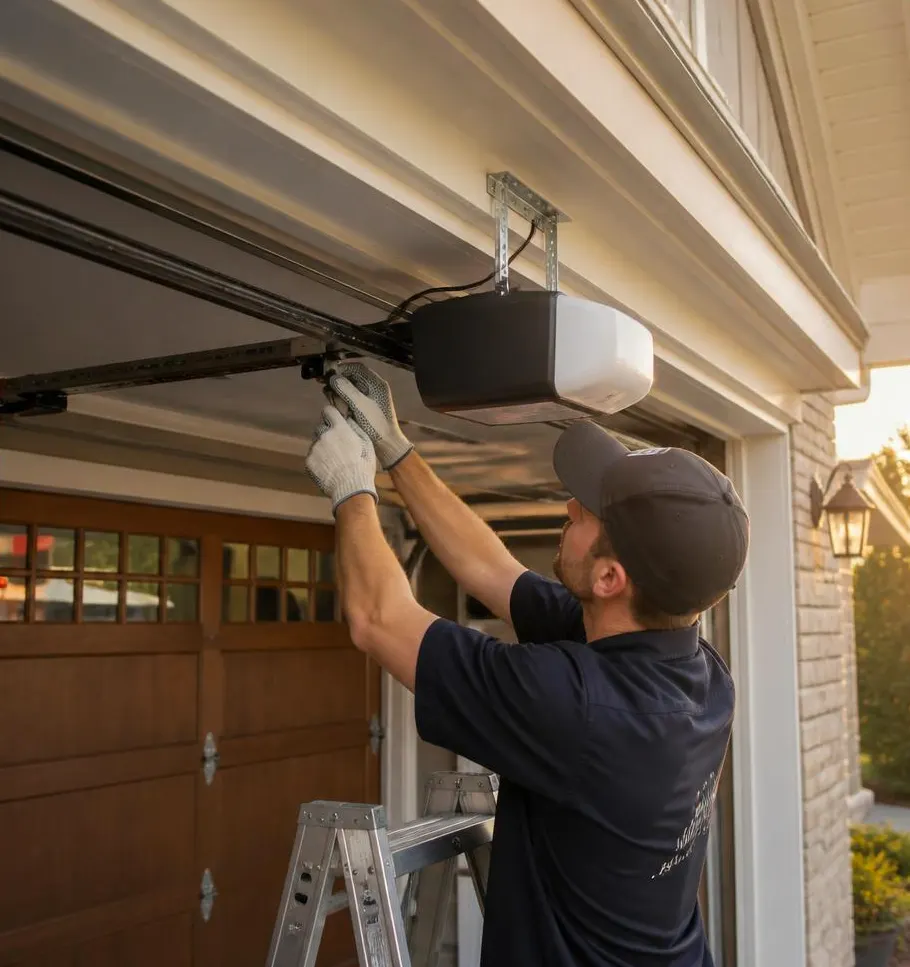
What a Technician Sees on These Calls
The call usually starts the same way: one spouse thinks the garage door is "ancient and dangerous," the other thinks it's "built like a tank and works fine." Both of them are a little bit right. On a typical visit to a home with a door and opener from the 1990s or earlier, a technician finds a mechanically solid door — heavier gauge steel, simple hardware, no plastic gears to strip — paired with safety features that simply didn't exist yet, or have quietly failed over three decades of Ohio winters. The door itself is often the least of the problem. The opener and the spring system are where the real decisions need to be made.
The Safety Gaps Worth Fixing, No Matter How Old the Door Is
No Photo-Eye Sensors
Openers made before the early-to-mid 1990s often have no safety reversal sensors at all — the pair of small eyes mounted a few inches off the floor on each side of the track. Without them, a closing door has no way to detect a kid, pet, bike, or stack of firewood in its path; it just keeps closing. This is the single most important thing to retrofit. In most cases it means replacing the opener itself, since older units can't simply have sensors bolted on and wired in reliably. This isn't a "someday" item — it's the one upgrade that directly prevents injuries.
Fixed-Code Remotes
If the remote uses a bank of tiny DIP switches instead of a sync button, it's sending the same unchanging signal every time. That signal can be captured and replayed by anyone with the right cheap electronics, which means a fixed-code system is a real entry point for a break-in, not just an inconvenience. Rolling-code technology, which generates a new code every time you press the button, has been standard for years and is worth upgrading to on its own, separate from the sensor issue.
Original Springs and Cables
A torsion spring doesn't care how old your door is cosmetically — it cares about cycle count. A spring installed in the 1990s has almost certainly been opened and closed tens of thousands of times and is well past a safe service life, even if it hasn't snapped yet. The cables running alongside it wear the same way. Both are under heavy tension and both fail suddenly, not gradually. If no one can remember the springs ever being replaced, that's the retrofit to schedule before winter puts extra strain on the system with cold, stiff metal and frequent openings to clear snow off the driveway.
Exposed Pinch Points on Older Panel Designs
Some older steel doors, especially ones without routed finger guards along the panel seams, can pinch fingers at the joints when the door is moving. This isn't usually worth replacing the whole door over, but it's worth being aware of and keeping hands clear, especially with kids in the house.
What's Genuinely Fine to Leave Alone
This is where the other spouse gets to be right. A heavy steel or wood door from the 1990s that still seals well, doesn't sag, and rolls smoothly on its tracks doesn't need to be replaced for safety reasons. Plenty of these older doors are actually sturdier than some newer budget models. Specifically fine to leave:
- Solid wood or heavy-gauge steel panels with no rust-through, warping, or structural damage.
- A simple chain-drive opener motor once it's been swapped for a unit with modern sensors and rolling code — the drive mechanism itself doesn't need to be fancy.
- Manual lock bar hardware, as long as it's not seized from rust and the homeowner remembers how to use it.
- Non-insulated steel doors, if the weatherstripping is still intact. Lack of foam insulation affects the energy bill, not safety, and is a renovation choice, not a repair.
- Original paint or finish, cosmetic dents, or a door that "doesn't match the house" anymore. None of that is a safety issue.
Where Local Weather Changes the Calculation
Ashtabula County's winters are hard on every moving part of a garage door system. Road salt tracked in on tires corrodes springs, cables, and hinges faster than in milder climates, and the freeze-thaw cycle stresses metal that's already near the end of its life. That's one more reason spring and cable age matters more here than it might in a warmer region — a spring that's been fine for years can finally give out on the exact kind of cold morning when everyone needs the door to open reliably. Perished or stiff weatherstripping is common on older doors by this point in the year too, but that's a maintenance fix, not a safety retrofit.
When to Call Ashtabula Garage Door
If there's no photo-eye sensor, if the remote still has DIP switches, or if no one can say when the springs were last replaced, it's worth a visit before winter settles in for good. Ashtabula Garage Door can evaluate the whole system in one trip — checking spring tension and cable wear, and handling garage door opener service to bring an older setup up to current safety sensor and rolling-code standards without necessarily replacing a door that's still structurally sound. If the springs are original to the house, spring replacement is the kind of job best scheduled on a technician's timeline, not the day the spring actually breaks.
Settle the argument with a real inspection instead of a guess. Call Ashtabula Garage Door to have your door and opener checked out before the next cold snap hits Ashtabula, OH.